I am going to skip the marketing voice for this one. If you are reading the News tab of a software product, you probably already sniffed out most of the noise. Here is the unfiltered version.
The problem that would not go away
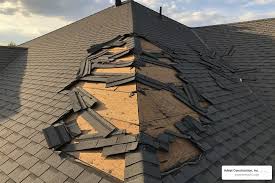
For years I watched the same thing happen after every storm. Hail hits a neighborhood on a Tuesday afternoon. By Wednesday morning, three out-of-state chaser crews are already canvassing, working out of a rented Sprinter van and a hotel by the interstate. By Thursday, the local roofers — the guys who have been in the community for fifteen years, who know the building inspectors by name, whose kids play on the same travel ball team as the homeowner's kids — are finally pulling a property list together.
Too late. The first wave is already gone.
That gap — between “a storm happened” and “my crew has a list of affected homeowners” — is where an unbelievable amount of revenue gets vaporized every single year. Not because the local roofers are worse. Not because their product is worse. Because the information asymmetry is brutal.
The chaser crews use pro-grade weather radar tools, property-data platforms, and logistics software. The local roofers use Google Maps and a windshield survey. The gap is not skill. The gap is tooling.
What the existing tools got wrong
I spent a long time inside the property-data and lead-generation world before I started Roofers Radar. Long enough to see the incumbent tools up close. Here is what I learned:
- They are built for enterprise. The large property-data platforms are spectacular tools, but they are designed for mortgage originators, insurance underwriters, and institutional real-estate investors. Asking a three-truck roofing company to learn them is like asking a pickup driver to operate a freight locomotive.
- They are priced for enterprise. Annual contracts. Seat minimums. Five-figure commitments before you get a single record. Meaningless to a regional roofing company that wants to buy 2,000 records for one specific storm in one specific week.
- They do not speak storm. Most of them let you draw a polygon on a map. Great. Now figure out which polygon corresponds to the core of the hail swath, which ring is the fringe, and how to filter out the commercial parcels unless you specifically want those. Good luck.
- They are slow. Not the data — the process. Sign up, wait for a sales rep, wait for onboarding, wait for a quote, wait for provisioning, wait for training. The storm does not wait.
Roofers are not dumb. Roofers are busy. The gap I kept seeing was not a knowledge gap — it was a friction gap. The right tool did not exist.
What Roofers Radar actually is
So I built the tool I wished existed. Here is the honest version of what it does:
- You upload any hail map. A radar screenshot, a TV-station broadcast graphic, an NWS storm report, a news chyron, a Twitter post from a local meteorologist — the AI reads the image, figures out what the colors mean on whatever scale the source uses, and pulls the geographic impact zone.
- You pick your severity zones. Core of the storm only? Core and inner ring? Everything including the fringe? You decide based on how aggressive you want to be on the chase.
- You pick your property filter. Residential, commercial, or both. Single-family only. Owner-occupied only. With or without a recent roof permit. With or without solar. Skip-traced or raw.
- You pay for what you pulled. No contracts. No seats. You see the exact count and the exact cost before we charge a dime. Credits do not expire.
- You get a CSV in minutes. Not a call, a quote, a demo, or a training session. A file. With the data. Ready to drop into your dialer, your CRM, your mail house, or your clipboard.
What Roofers Radar is not
I want to be equally clear about this, because the roofing industry has been burned by too many vendors who promise too much. Roofers Radar is not a magic lead-generation machine. It does not close your jobs for you. It does not replace your sales process. It does not make bad crews good or bad storms big.
What it does is close the speed gap. When a storm hits, it makes sure you are not sitting at your desk on Wednesday morning with nothing to work while a Sprinter van from three states away is already knocking doors in your neighborhood. That is it. That is the whole product.
The first truck in is not always the winner. But the last truck in almost always loses.
Why now
Three things changed in the last few years that made this product possible — and frankly, necessary:
- The underlying property data got good and got cheap. The same enterprise-grade property database that the big mortgage and real-estate firms pay six figures for is now available programmatically, priced per record, no commitment. That single shift is what made it possible to sell 2,000 records for one storm without a contract.
- The AI actually works. Reading a weather map and translating color-coded severity into a polygon used to be a GIS-analyst job. Now it is a 30-second Claude API call. Not magic — just a shift in what is possible.
- The gap between “local” and “out-of-state chaser” keeps getting meaner. Chaser crews now have better tooling, better logistics, and faster response than ever. Local contractors either get the same tools or they keep losing the first 48 hours.
Where this goes next
We are not trying to be the last piece of software a roofing company ever buys. We are trying to be the first phone call after a storm. A small, sharp, useful tool — the kind you pay for when you need it, do not pay for when you do not, and never have to think about in between.
There is a longer roadmap. Commercial deep-dives. Better commercial filtering. A public damage gallery so the whole industry has a shared view of where the next active zones are. Integrations into the CRMs and dialers that roofing companies already use. All of that is coming.
But the core promise is going to stay the same: upload a map, get a list, pay for what you used, go knock the door while the hail is still on the grass.
If that is something that would save you an hour — or thirty thousand dollars — the next storm, take two minutes and try it. Five credits are on us.
— Founder, Roofers Radar