The one thing weather researchers and roofers agree on: you can not forecast a severe-storm season the way you forecast a hurricane season. Hail and tornadoes come from local ingredients that assemble in hours, not weeks. But the climate-scale ingredients that load the dice — sea-surface temperatures, drought patterns, jet-stream position, El Niño-Southern Oscillation state — are forecastable. And for 2026, every one of them is pointing the same direction: another active year.
Here is the short version of where the major outlooks landed, what the early-season radar is already telling us in mid-April, and the specific moves smart roofing companies are making between now and the Memorial Day weekend that traditionally kicks off peak claim season.
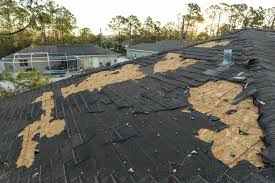
What the major forecasters are saying
Hurricane season (Atlantic basin)
Colorado State University — in its widely-cited early April outlook — called for an above-average Atlantic hurricane season, projecting 17 named storms, 9 hurricanes, and 4 major hurricanes. The US landfall probability for at least one major hurricane is pegged at 71%, well above the long-term average of 43%. AccuWeather, the Tropical Meteorology Project, and NOAA's preliminary outlook are all in the same neighborhood.
The primary driver: an unusually warm Atlantic Main Development Region combined with a transition out of El Niño toward ENSO-neutral or weak La Niña conditions. La Niña years historically produce less vertical wind shear in the Caribbean and Gulf — and less shear means storms organize and intensify more easily.
Severe weather (hail, wind, tornado)
There is no single canonical “severe-weather forecast” the way there is for hurricanes, but the Storm Prediction Center's winter analysis and several academic convective-outlook models converge on the same picture for 2026:
- Above-average severe activity expected across the southern Plains (Texas, Oklahoma, Arkansas) from late April through June.
- Elevated hail risk in the Front Range of Colorado and the High Plains from May through early August, driven by a persistent dryline setup.
- An active Midwest and Upper Midwest from June through August, with the strongest signal for severe weather shifting north compared to climatology.
- A potentially volatile Dixie Alley season (MS, AL, GA, TN) in March–May, continuing a multi-year trend of severe weather shifting east of the traditional tornado-alley footprint.
What we are already seeing on radar
Forecasts are one thing. What the atmosphere is actually doing in April is another. A few signals worth flagging as of mid-April 2026:
- An unusually active early-April severe pattern produced multiple significant hail events across North Texas, Oklahoma, and the Ark-La-Tex region in the first two weeks of the month — earlier and more concentrated than the 5-year average.
- Gulf sea-surface temperatures are running 1.0–1.5°C above the 1991–2020 climatology, providing more fuel for severe thunderstorms firing off the dryline.
- The southern Plains drought that suppressed some 2024 severe activity has largely broken, restoring the low-level moisture profiles that classic hail-producing supercells need.
None of this guarantees a record year. Severe weather is still fundamentally a week-by-week, event-by-event phenomenon. But the ingredients are assembled, and history says when the ingredients are assembled, the events show up.
The regional playbook
If you run a roofing company, here is how to think about 2026 territory planning, broken down by the regions most likely to deliver claim volume:
North Texas & I-35 Corridor
Still the single most important market for storm-chase volume. The risk window is wide — late March through early July — with a secondary peak in September–October. The smart move: have your out-of-state-license paperwork current by April 1, pre-stage suppliers in DFW, Austin, and San Antonio, and build a direct-mail or digital-lead pipeline ready to fire within 24 hours of an event.
Colorado Front Range
Denver, Boulder, Colorado Springs, and Fort Collins sit in what may be the most underpriced hail market in the country. The 2025 Denver mega-event was not an anomaly — it was a preview. Forecast guidance for 2026 favors another active Front Range season, with the peak window being late May through mid-July. Crews willing to be in Denver within 48 hours of an event have an outsized advantage because local crew supply is still catching up to demand after 2025.
Upper Midwest (MN, WI, IA, IL)
The quietly-growing opportunity. 2025 saw a sharp uptick in Twin Cities, Milwaukee, and Madison claim volume, and the 2026 pattern signals more of the same. Upper Midwest homeowners are also less saturated by chaser crews than Texas or Oklahoma residents, meaning door conversion rates are typically higher.
Deep South / Dixie Alley
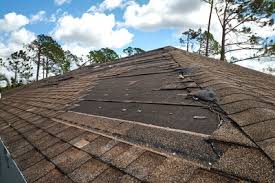
Tornado risk is the dominant hazard here, and the damage pattern is different from hail: concentrated, narrow, and catastrophic rather than broad and shingle-deep. If you operate in Alabama, Mississippi, northern Louisiana, or north Georgia, the 2026 playbook leans harder toward full-replacement work and insurance-claim depth rather than volume chasing.
Gulf Coast & Southeast
This is a hurricane story. Above-average CSU outlook + warm Gulf = an elevated probability of at least one major-hurricane landfall somewhere between Texas and North Carolina. Florida, the Carolinas, and the western Panhandle are the highest-probability landfall zones based on steering-pattern guidance. Crews that work the Gulf should have storm-response contracts, travel logistics, and crew lodging pre-arranged by August 1.
What smart roofers are doing between now and May
The 60 days between mid-April and mid-June are the most important window of the year for roofing companies that want to operate at the top of their game during peak season. Here are the moves we are watching the best operators make:
- Licensing, registration, and insurance paperwork. Out-of-state licensing takes 10–60 days depending on the state. If you are planning to work Colorado, Minnesota, or any state you did not operate in last year, your paperwork should already be moving.
- Supplier and material stockpile plans. The 2025 season saw material lead times blow out to 4–6 weeks in peak events. Pre-negotiating allocation with two or three suppliers in each major market is table stakes.
- Lead infrastructure audit. If it takes you more than an hour after a storm to have a filtered list of affected homeowners in hand, your competitors are winning the first wave. This is the specific gap Roofers Radar was built to close.
- Sales and canvassing staff ramp. The best companies are hiring and training in April and May, not July. July is too late — the good talent is already working somewhere else or already on a claim.
- Claim-documentation discipline. Carriers are tightening. Photographic evidence, Xactimate literacy, and pre- storm roof-condition documentation are no longer optional for insurance work.
The bottom line
The 2026 season is shaping up to be another one where the operational winners make more money than the tactical winners. The contractors with the cleanest logistics, the fastest lists, and the tightest claim documentation will outperform the contractors with the cheapest prices or the loudest doorknockers — by a wide margin.
We are not in the business of predicting individual storms. Nobody is. What we can do is give you the fastest possible path from “a storm happened” to “my crew has a filtered, deduplicated, skip-traced list of homeowners inside the impact zone.” In 2025 that speed was worth real money. In 2026 it is going to be worth more.
If you want to see how the list part works, spend two minutes in the product — upload any hail map and we will show you exactly how many residential and commercial properties fall inside the impact zone before you spend a dollar.